Feasibility & Pricing — Internal Decision Platform
As a product design lead on a zero-to-one project, designing a core internal platform that enables teams to evaluate whether a project is viable and how it should be priced— supporting confident decisions at scale.
Role
Product Designer
Industry
Healthcare Research SaaS
Duration
3 months
Overview
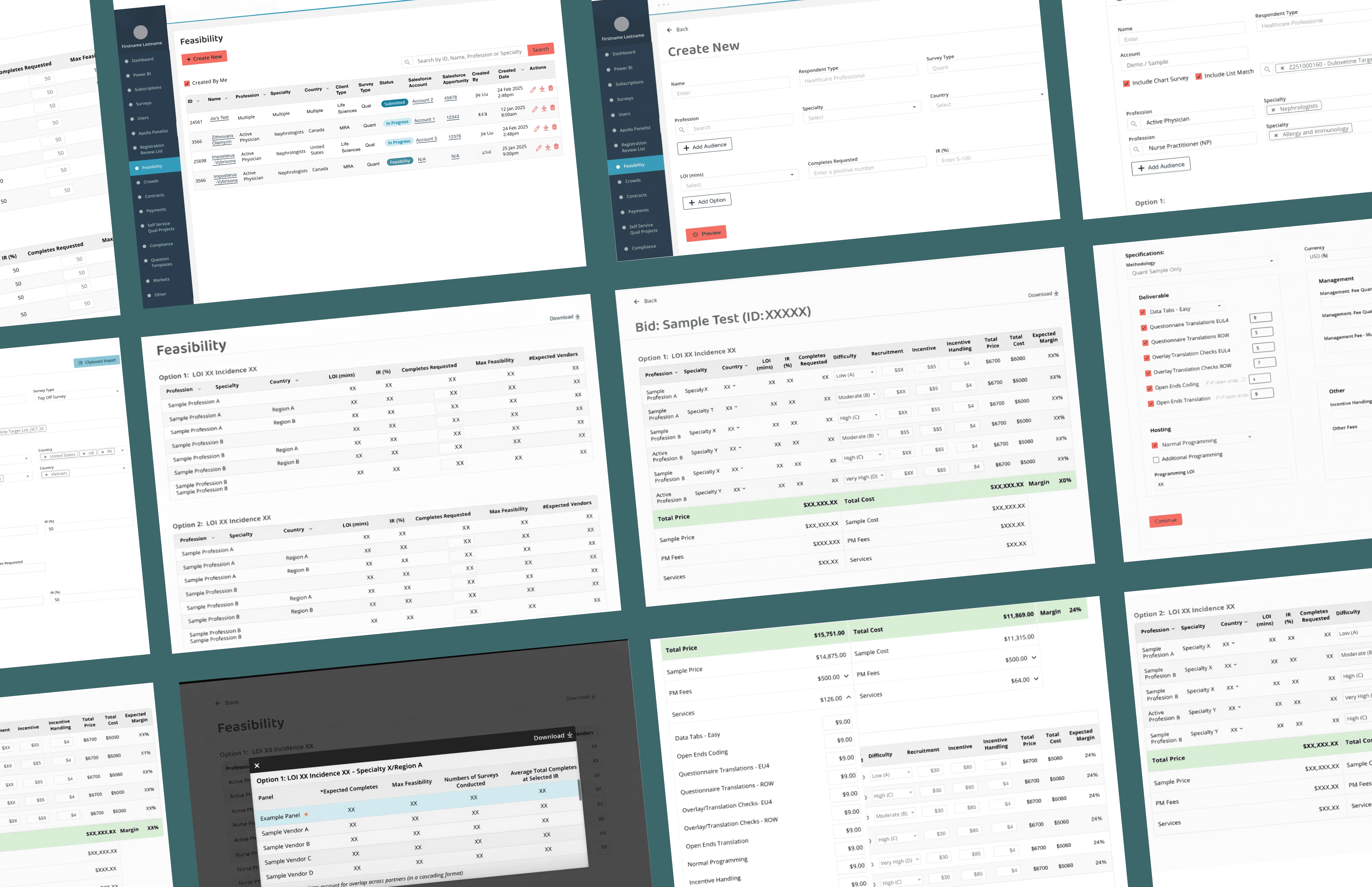
Feasibility & Pricing Project is an internal decision platform that can help users evaluate whether a study or project is viable and how it should be priced.
Primary Users:
Sales, Operations, and Research teams responsible for evaluating incoming client requests and preparing project proposals.
Challenges:
Before this project, there was no dedicated system for feasibility evaluation and pricing at Konovo. Teams relied on:
Excel spreadsheets to estimate feasibility and project costs
Salesforce to manually assemble client-facing quotes
Cross-team coordination to validate assumptions
While this process worked at a smaller scale, it became increasingly fragile as project volume and complexity grew.
Deliverable:
I led the design of a new internal platform that unified feasibility assessment and pricing logic into a single, structured experience — creating a shared source of truth across Sales, Operations, and Finance.
Industry Context:
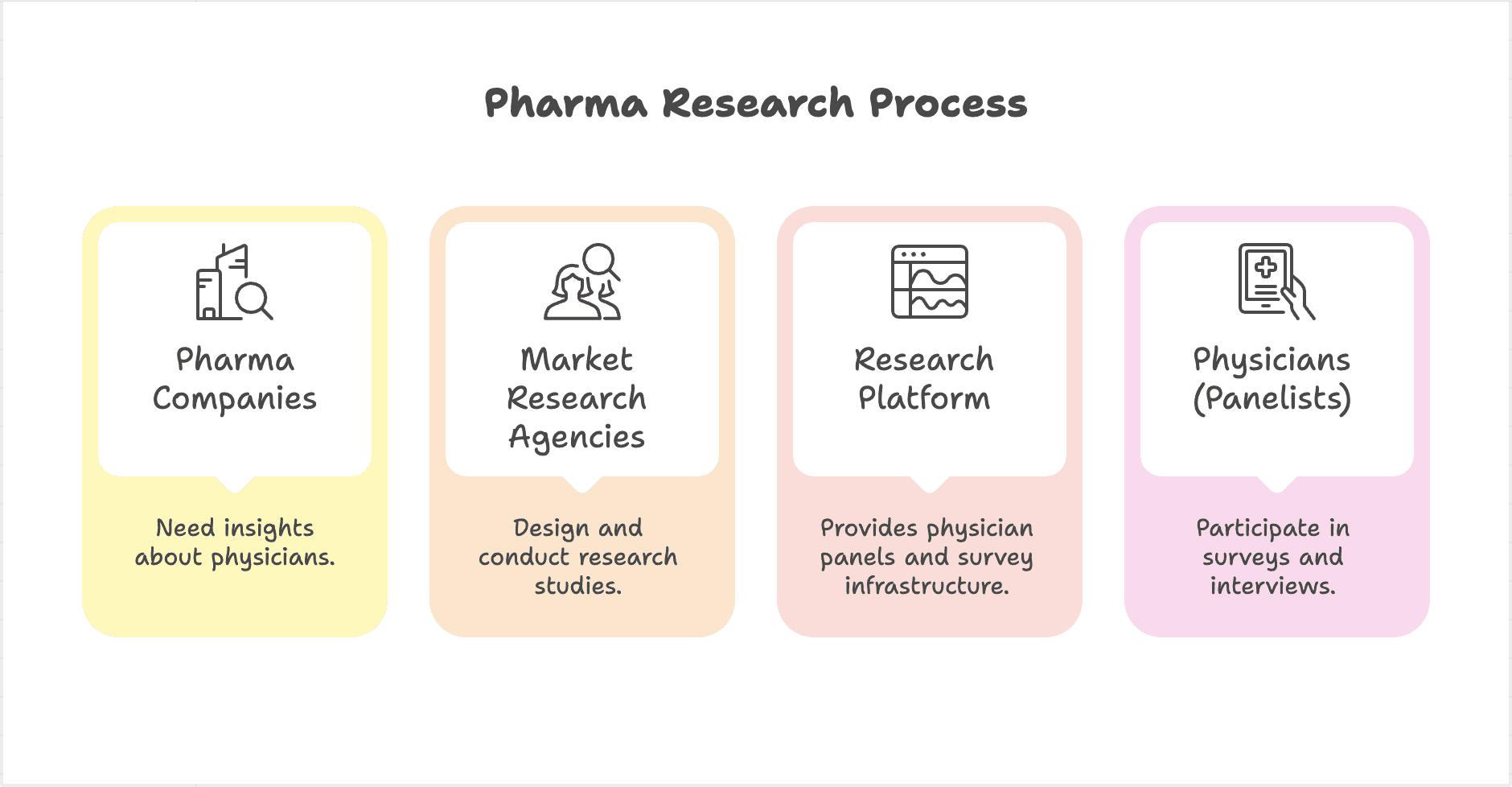
In the healthcare market research ecosystem, pharmaceutical companies rely on research agencies to understand physicians’ perspectives on treatments and medical products. These agencies design research studies but depend on specialized platforms to recruit qualified physicians and run surveys.
Research platforms provide physician panels and survey infrastructure that enable these studies to take place. Physicians participate in surveys or interviews, generating the data needed for healthcare research insights.
This ecosystem creates a continuous flow of research projects that must be evaluated for feasibility and pricing before they can be proposed to clients.
Research Workflow
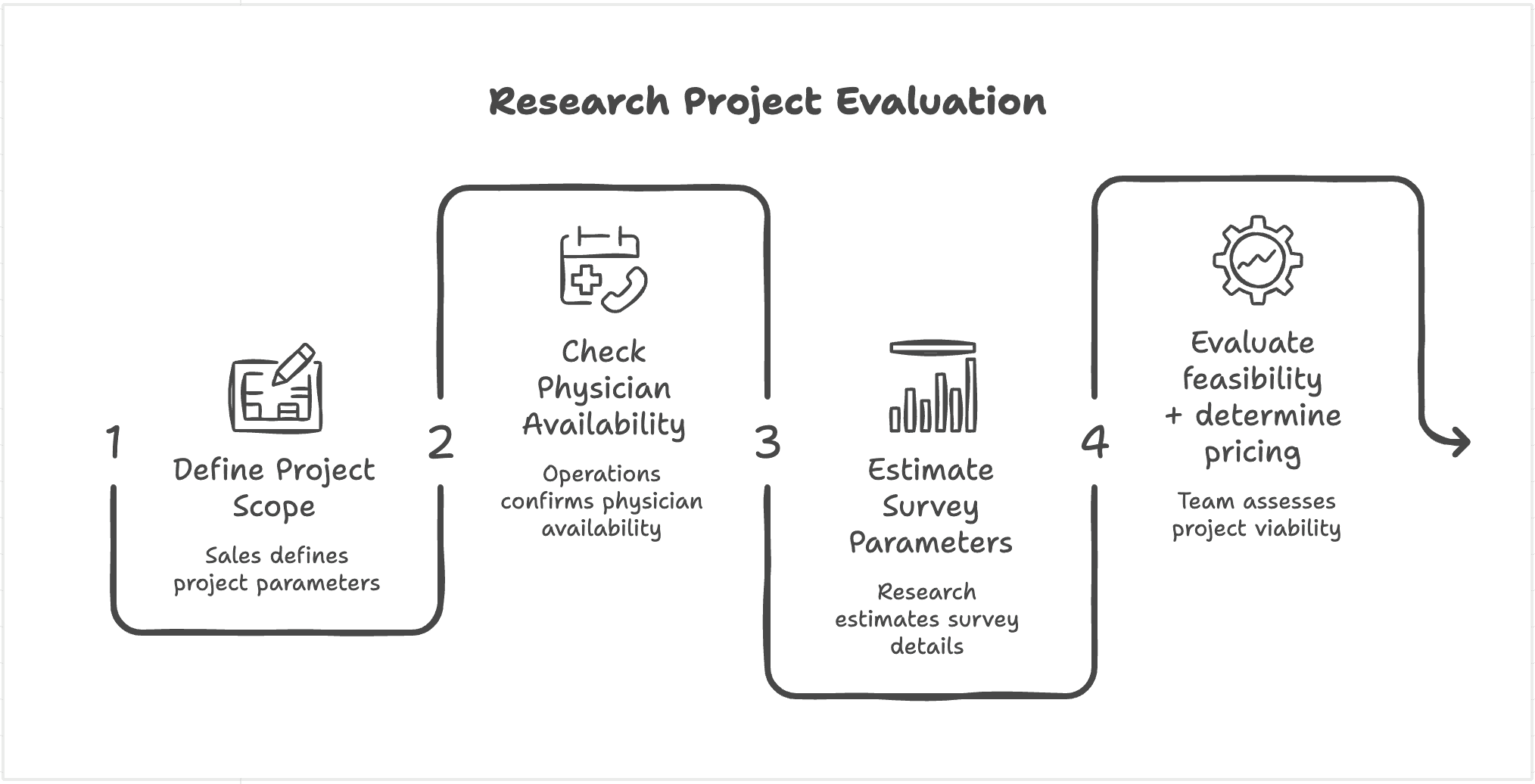
Research requests from clients require coordination across multiple teams.
Sales defines the project scope, Operations verifies physician availability, and Research estimates survey parameters.
The team must then evaluate whether the study is feasible and determine appropriate pricing before submitting a proposal.
The Problem
The feasibility and pricing evaluation process relied on fragmented spreadsheets and cross-team coordination, making it difficult to assess a project’s viability quickly.
Critical feasibility and pricing logic were scattered across multiple spreadsheets
Pricing calculations were difficult to review, validate, or explain to stakeholders
Knowledge depended heavily on individual experience
Small input changes could significantly impact project outcomes
As a result, feasibility and pricing decisions were inconsistent and slow, making it difficult for teams to respond quickly to client requests.
Design Approach
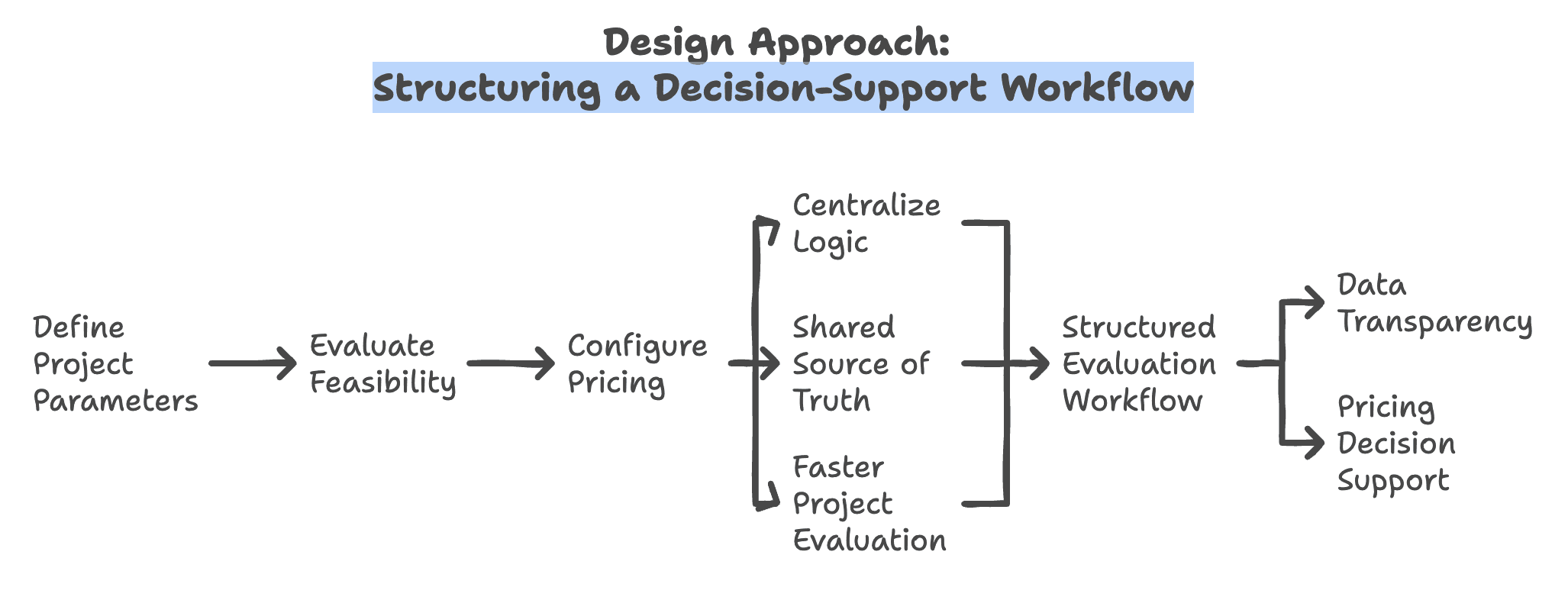
To support faster and more reliable project evaluation, the platform was designed around a structured decision workflow that centralizes feasibility logic and pricing signals.
Guided Decision Workflow
To translate the strategy into the product experience, the platform guides users through a structured evaluation workflow. Each step helps teams progressively refine the project scope, review feasibility signals, and determine pricing.
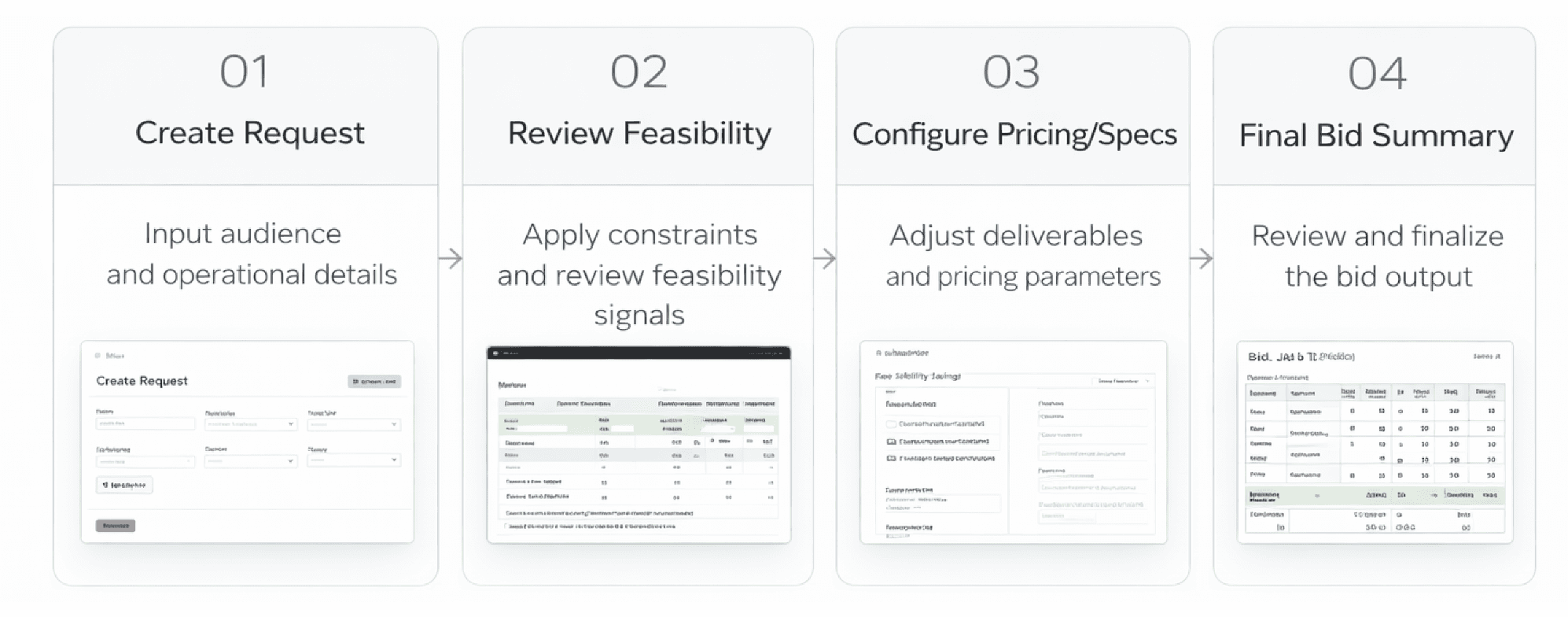
Translating the Workflow into the Product Experience
Project Tracking & Workflow Entry
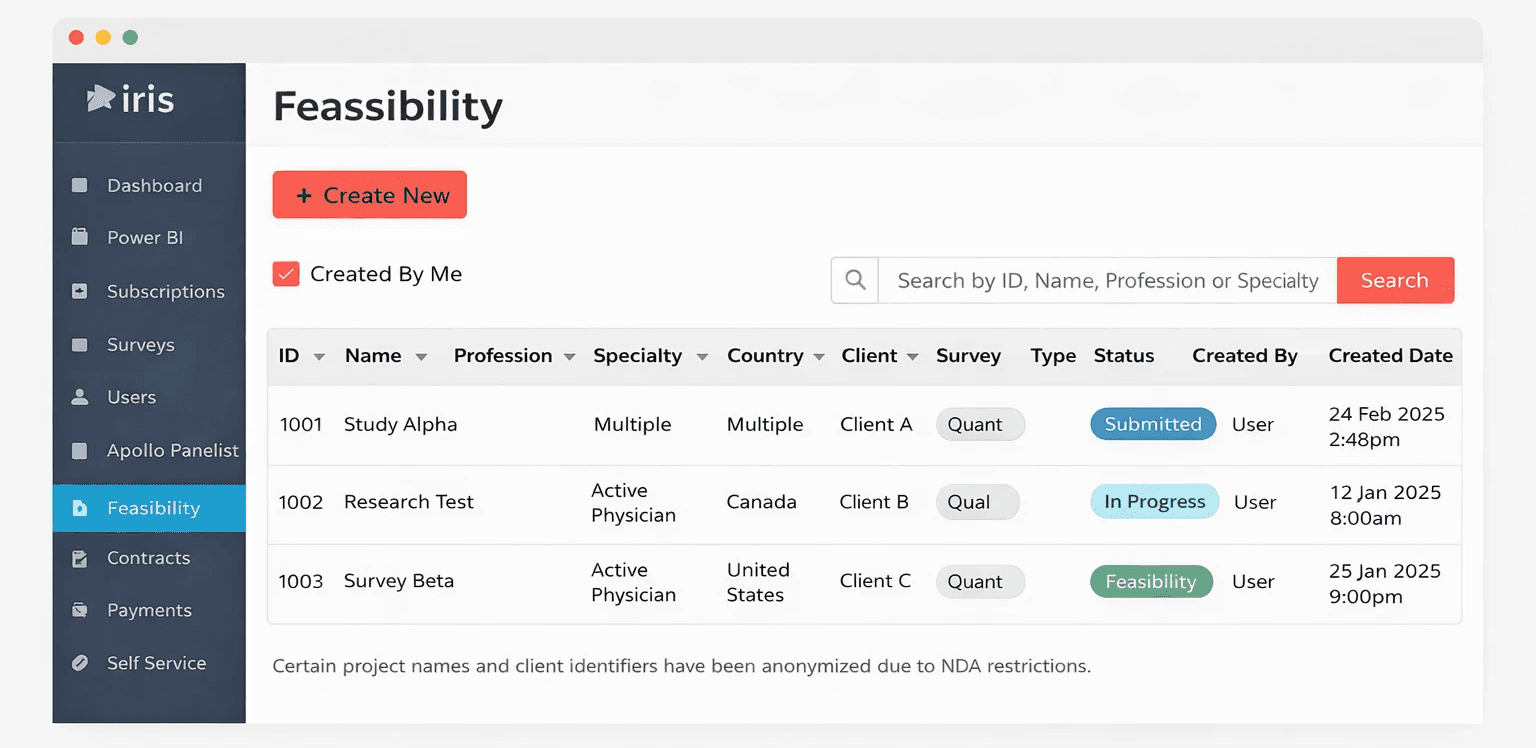
The platform also provides a centralized view for tracking feasibility requests. Teams can monitor project status, review ownership, and quickly navigate into ongoing evaluations.
Module 1 — Create Request (Inputs)
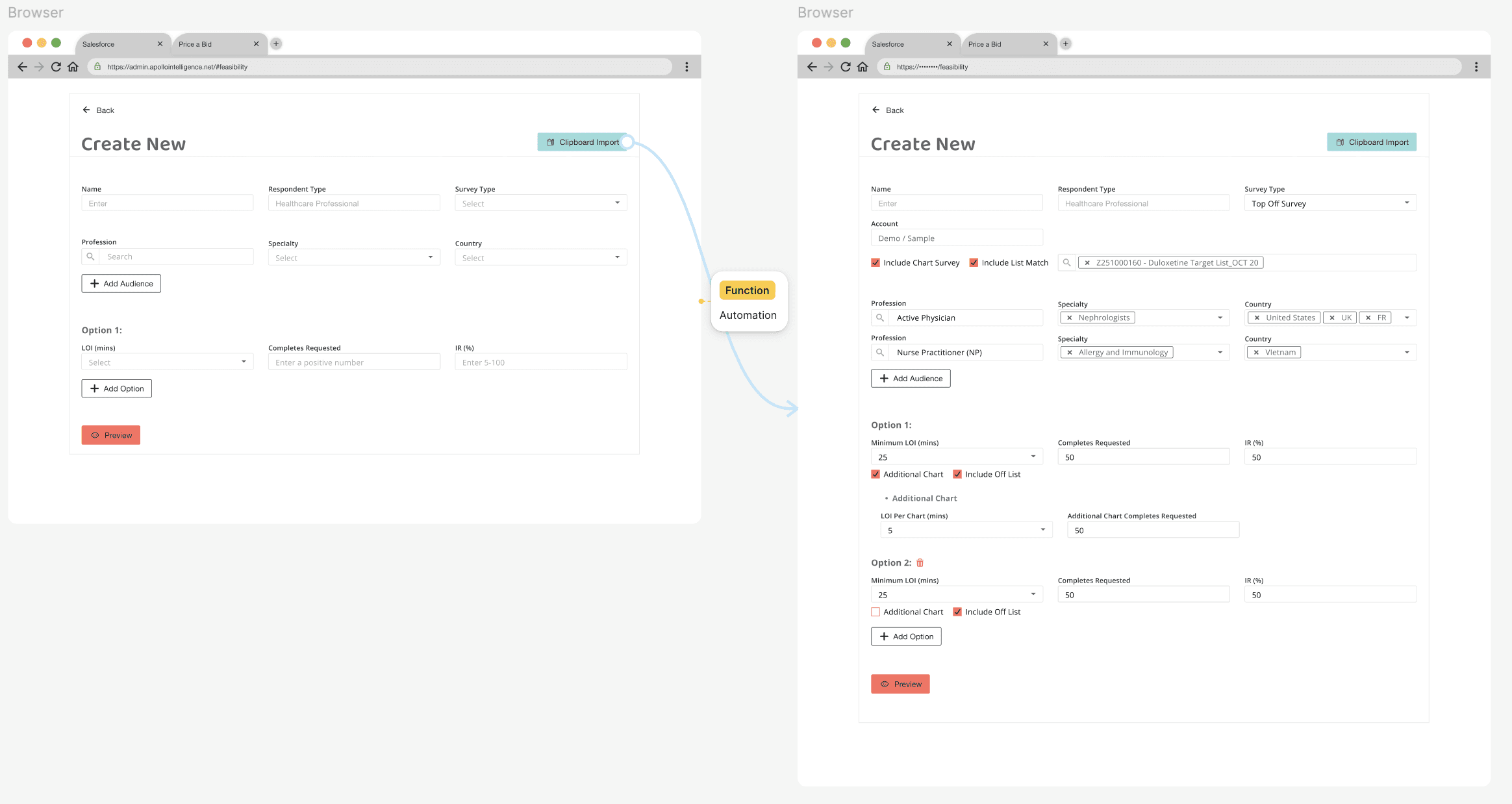
Step 1 — Define Project Request
Key inputs include:
Target audience (profession, specialty)
Geographic scope
Survey parameters such as LOI and incidence rate
Requested completes and additional survey options
The form is structured to surface only the most critical inputs first, allowing users to quickly define a project request without being overwhelmed by advanced configuration options.
To reduce manual input and speed up request creation, the interface supports clipboard import automation. Users can paste structured project information directly into the form, allowing the system to automatically populate key fields including audience, geography, and survey parameters.
Module 2 — Feasibility Evaluation (Data & signals)
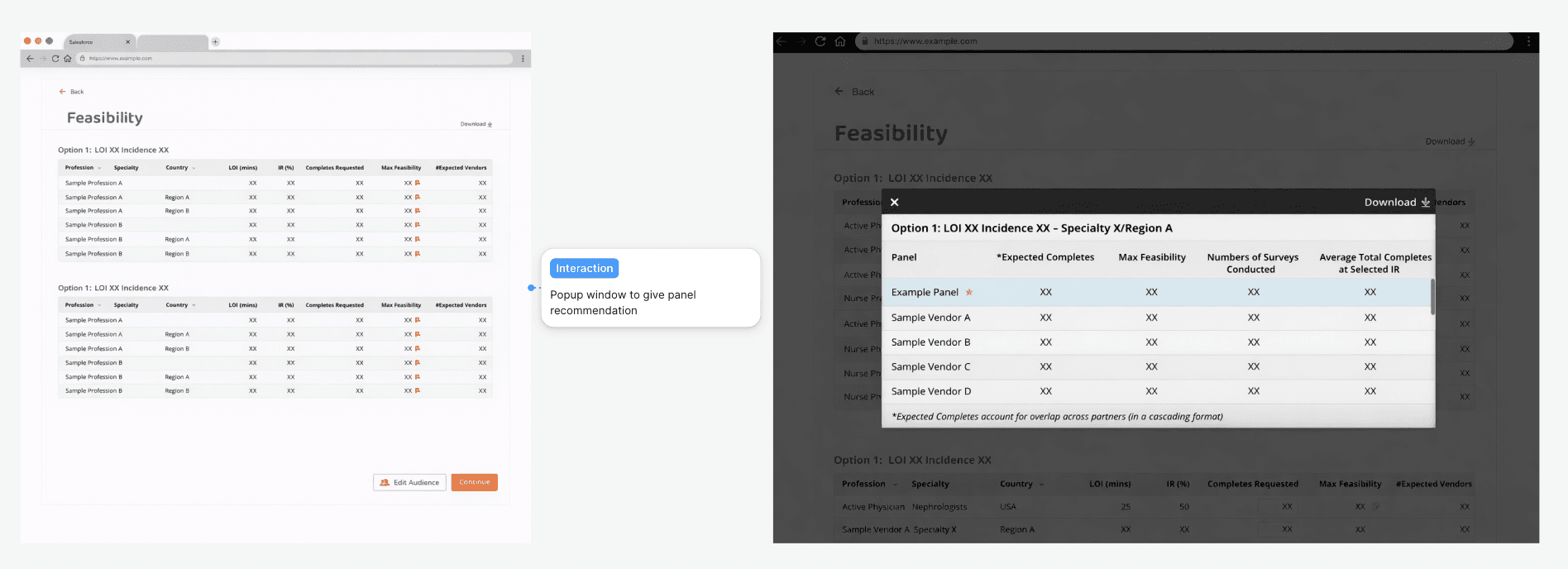
Step 2 — Review Feasibility Signals
After defining the project request, the platform evaluates feasibility by combining user inputs with panel availability and historical survey performance data.
This step helps teams quickly determine whether a project is viable before adjusting pricing or project specifications.
Module 3 — Configure Pricing & Generate Bid
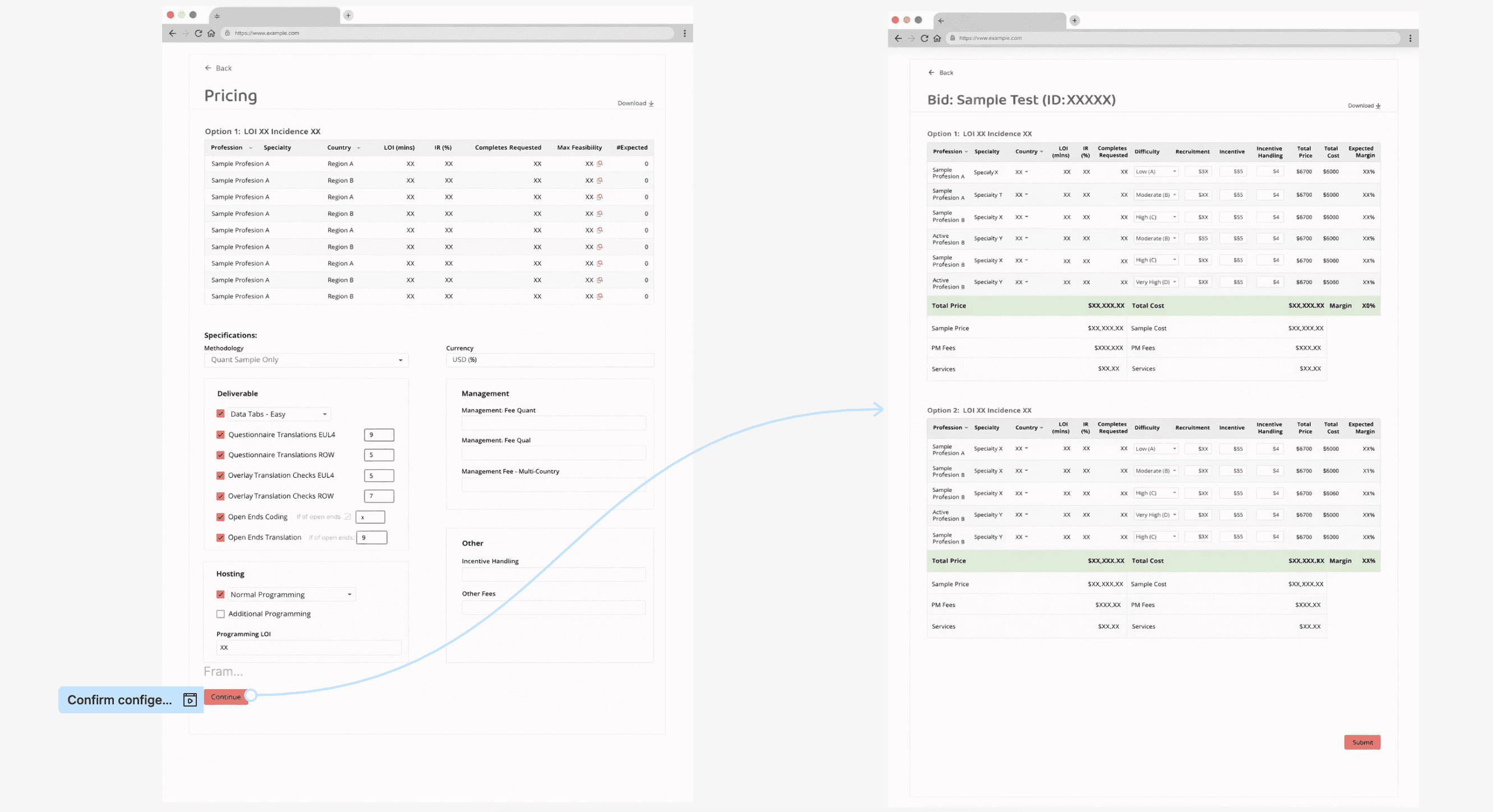
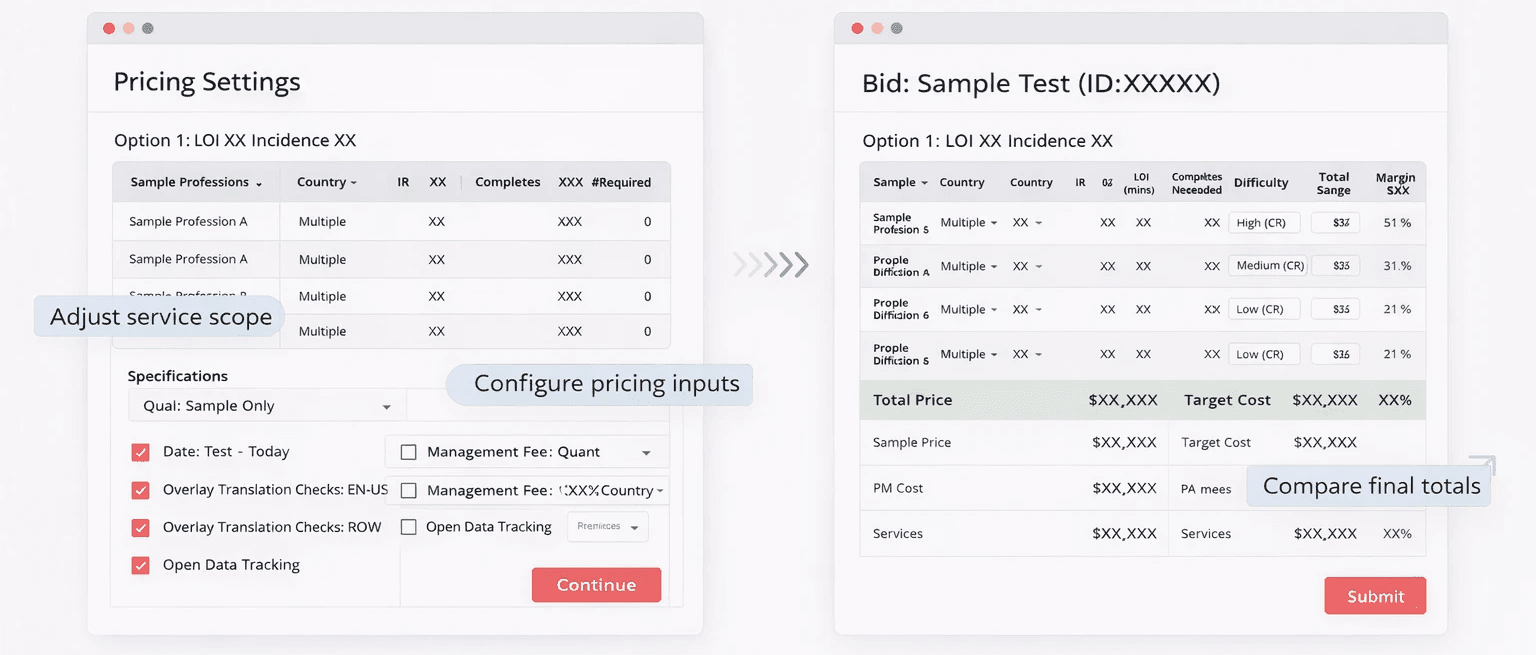
Step 3 — Pricing Configuration & Generated Bid Summary
In this step, teams configure pricing parameters and project specifications. The system then generates a structured bid summary that consolidates feasibility signals, recruitment difficulty, incentive assumptions, and expected margins.
System Scalability: Supporting More Complex Survey Configurations
As the platform evolved, research requests became more complex, often involving multiple audiences, regions, and survey configurations.
The system was designed to extend the same evaluation workflow while supporting more complex research scenarios
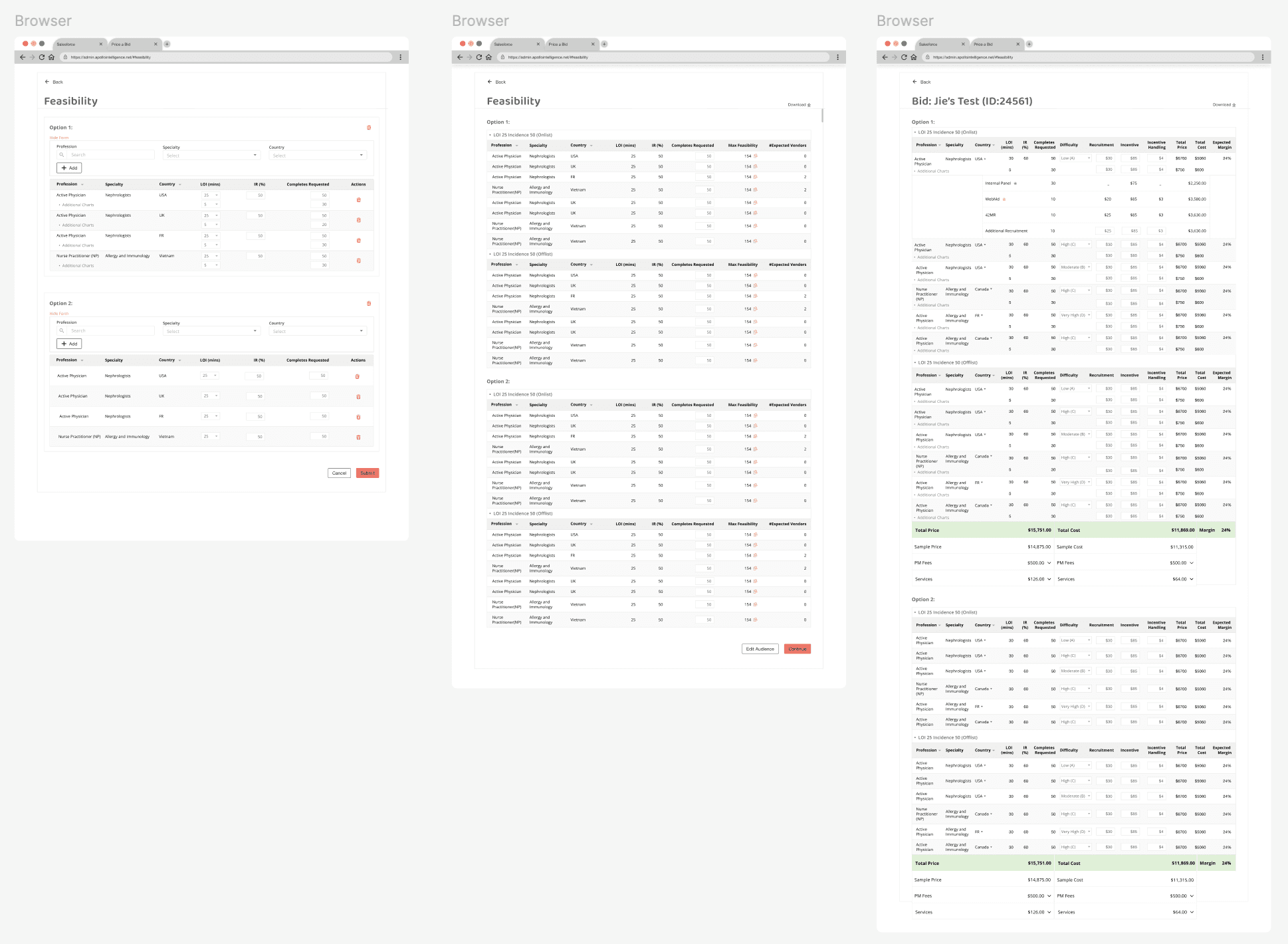
The platform maintains a consistent decision workflow—from request definition, to feasibility evaluation, to pricing and bid generation—even as project complexity increases.
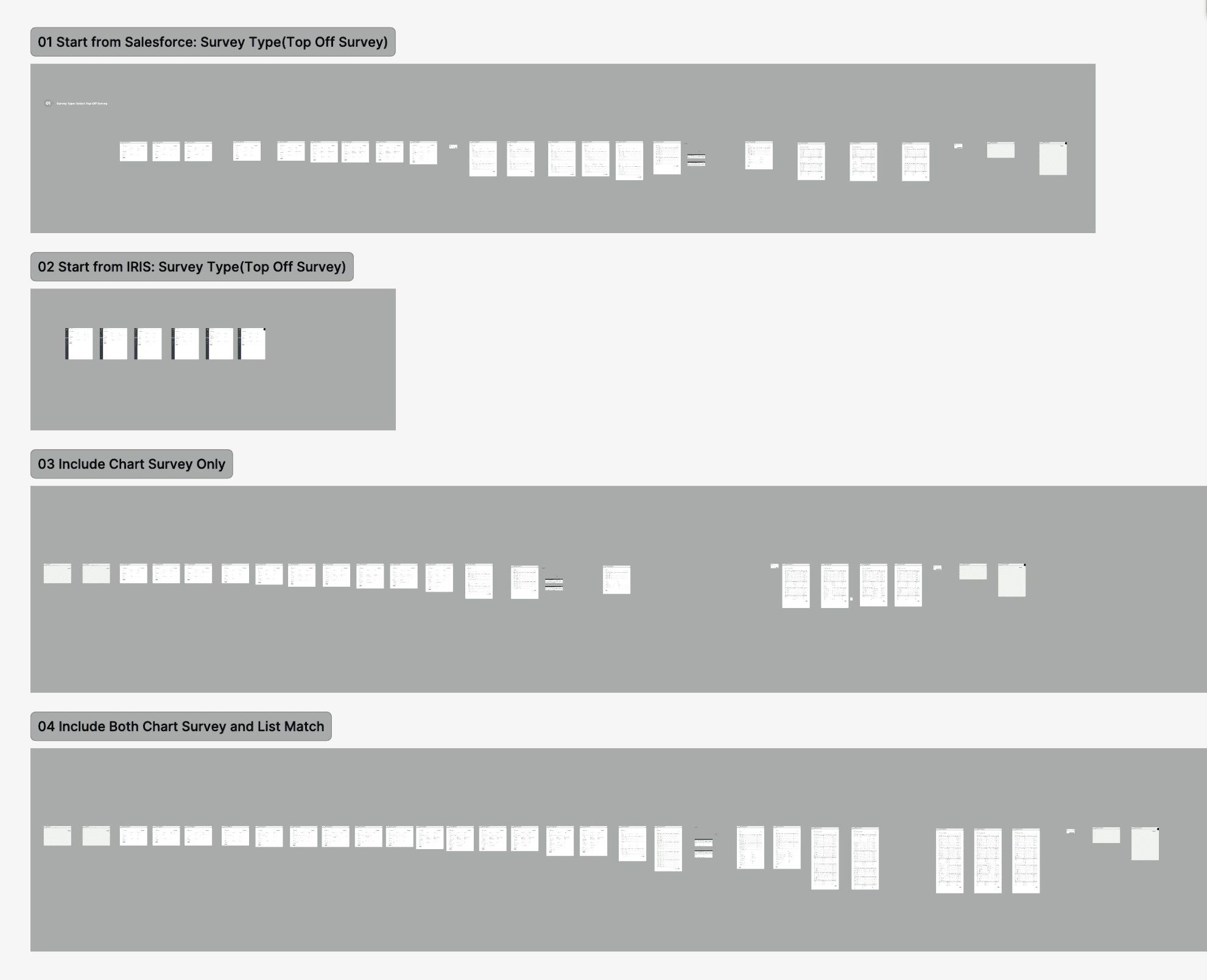
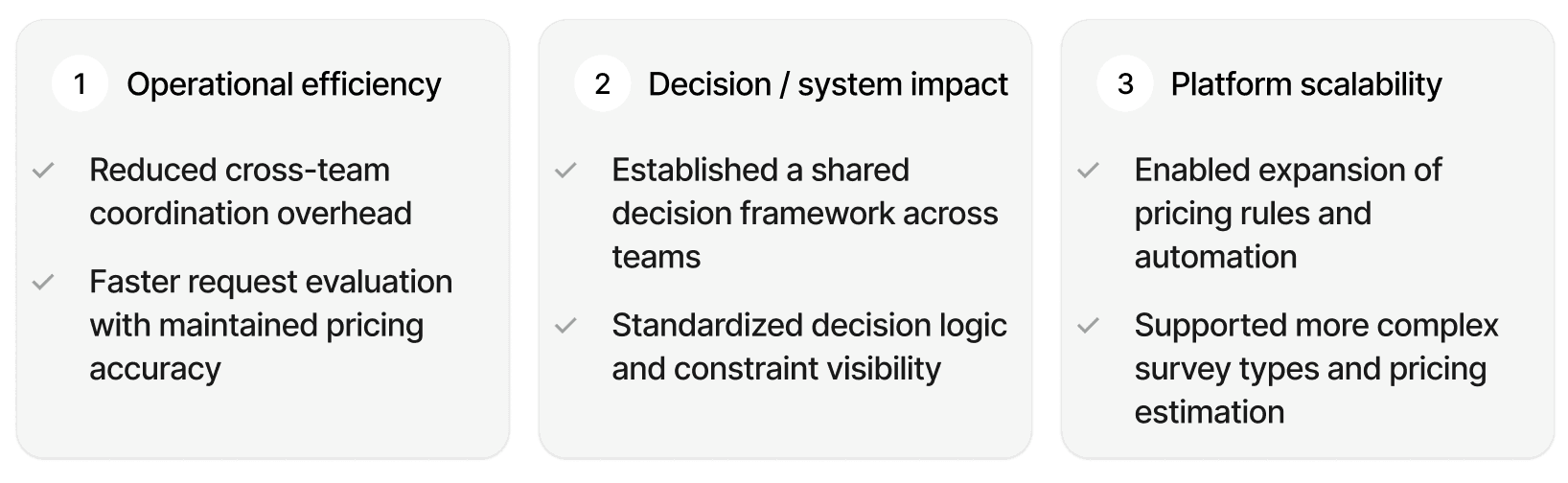
Impact & Outcome
The Feasibility & Pricing platform replaced fragmented spreadsheets with a structured decision workflow for evaluating research projects.
By centralizing feasibility signals and pricing configuration into a single system, teams can evaluate projects more consistently and respond to client requests with greater confidence.
Reflection:
Designing this platform required understanding not only interface design, but also the operational logic behind healthcare market research projects.
Through this project, I learned several key lessons about designing decision-support systems.
Designing for complex operational workflows
Feasibility evaluation involves multiple teams and variables, including audience availability, survey parameters, and pricing constraints. Structuring the experience around a guided workflow helped simplify these decisions and reduced cognitive load for users.
Balancing flexibility with clarity
Users needed the ability to adjust many parameters, but too many visible controls could quickly overwhelm the interface. Using progressive disclosure helped expose advanced configuration only when necessary.
Supporting trust in system outputs
Because pricing and feasibility calculations directly impact client proposals, users needed transparency into how results were generated. Providing drill-down details and feasibility signals helped teams understand and trust the system’s recommendations.
This project strengthened my ability to design complex internal platforms that support operational decision-making across teams.
Other projects
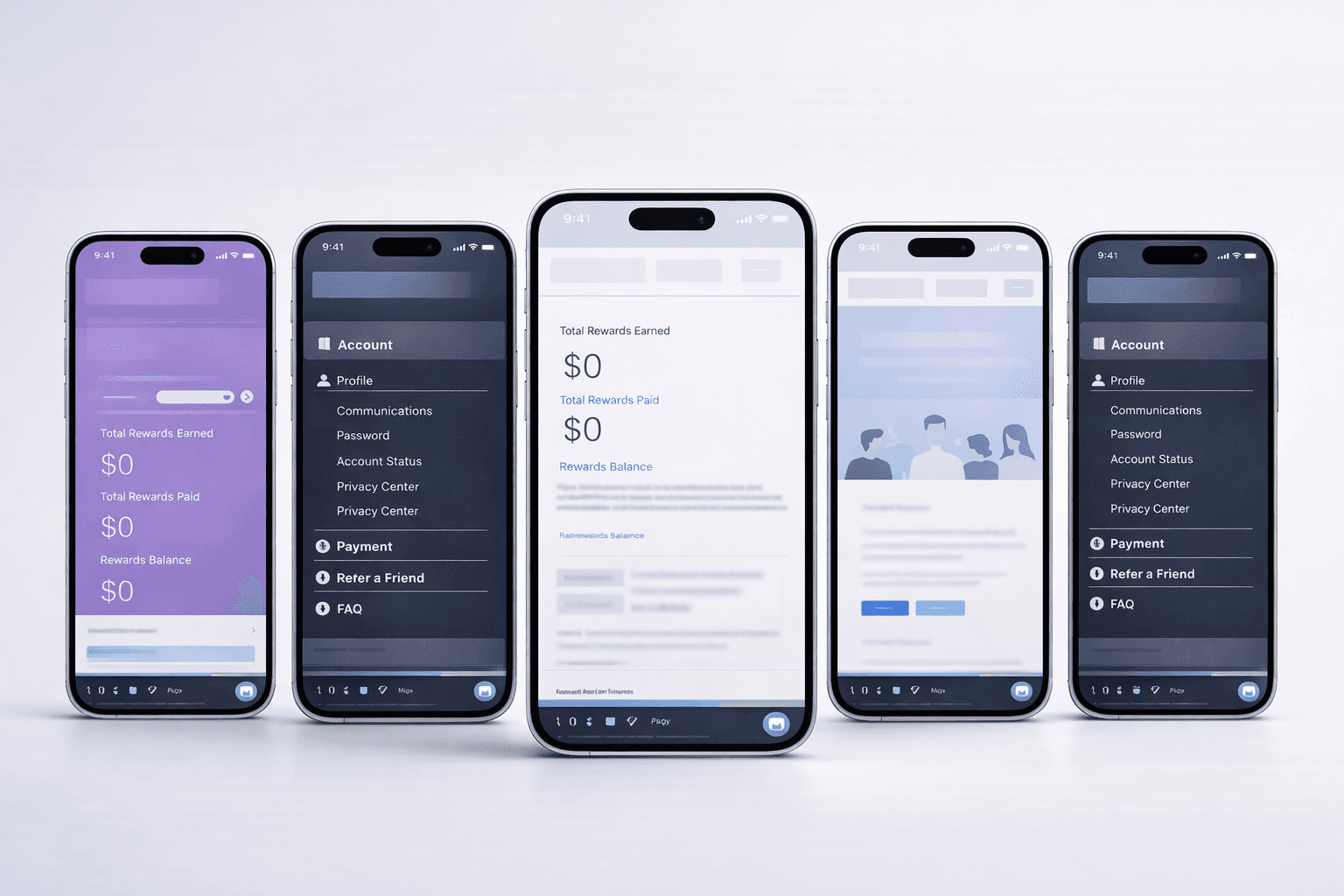
Respondent Portal Redesign (Web + Mobile)
Mobile-First Panelist Experience
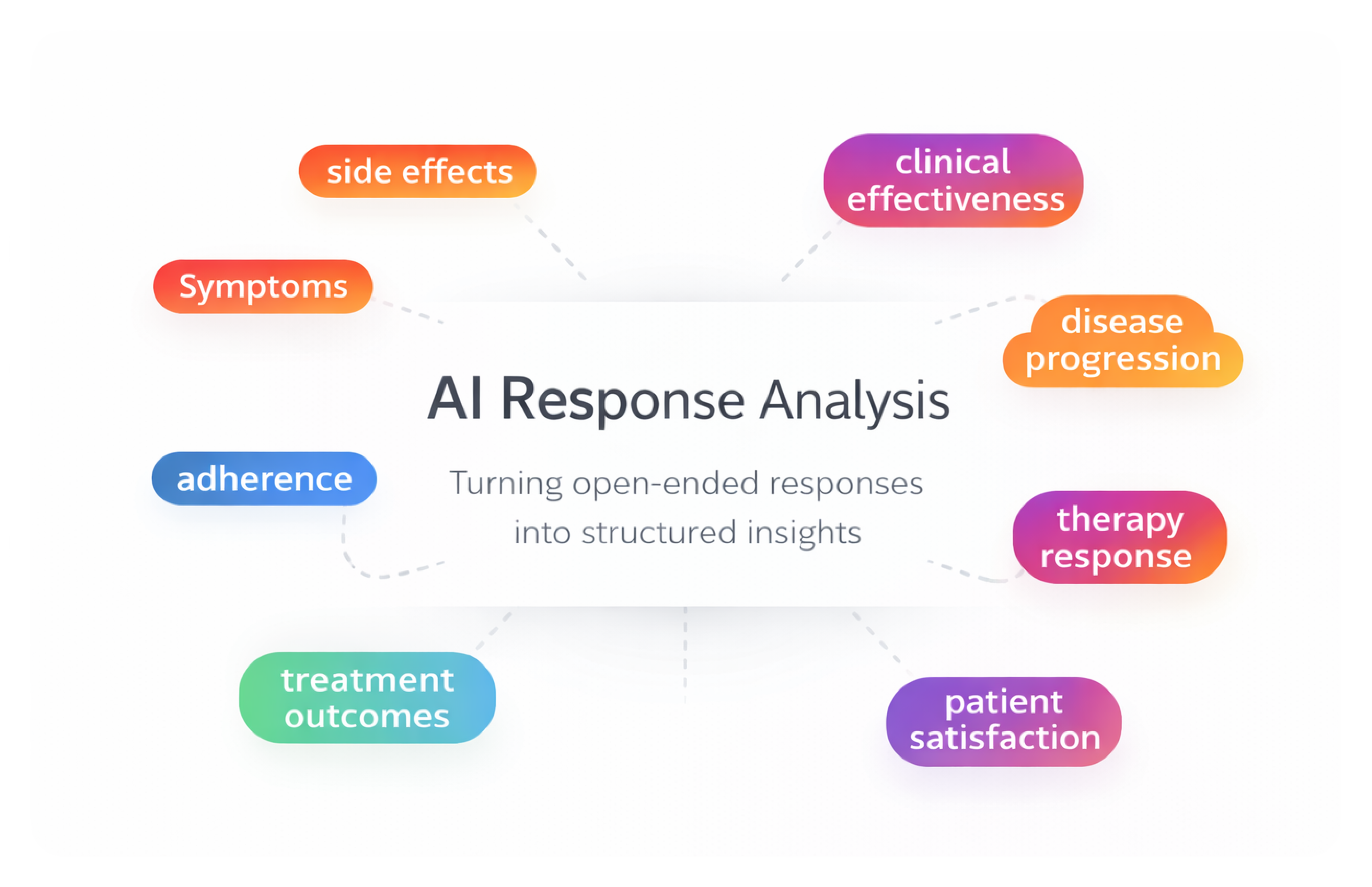
AI-Assisted Survey Response Analysis Tool
As a product designer on a 0-to-1 initiative, I designed an internal AI-assisted research tool that helps teams analyze and categorize large volumes of open-ended survey responses — enabling researchers to move from raw qualitative data to structured insights faster while maintaining transparency and human control.
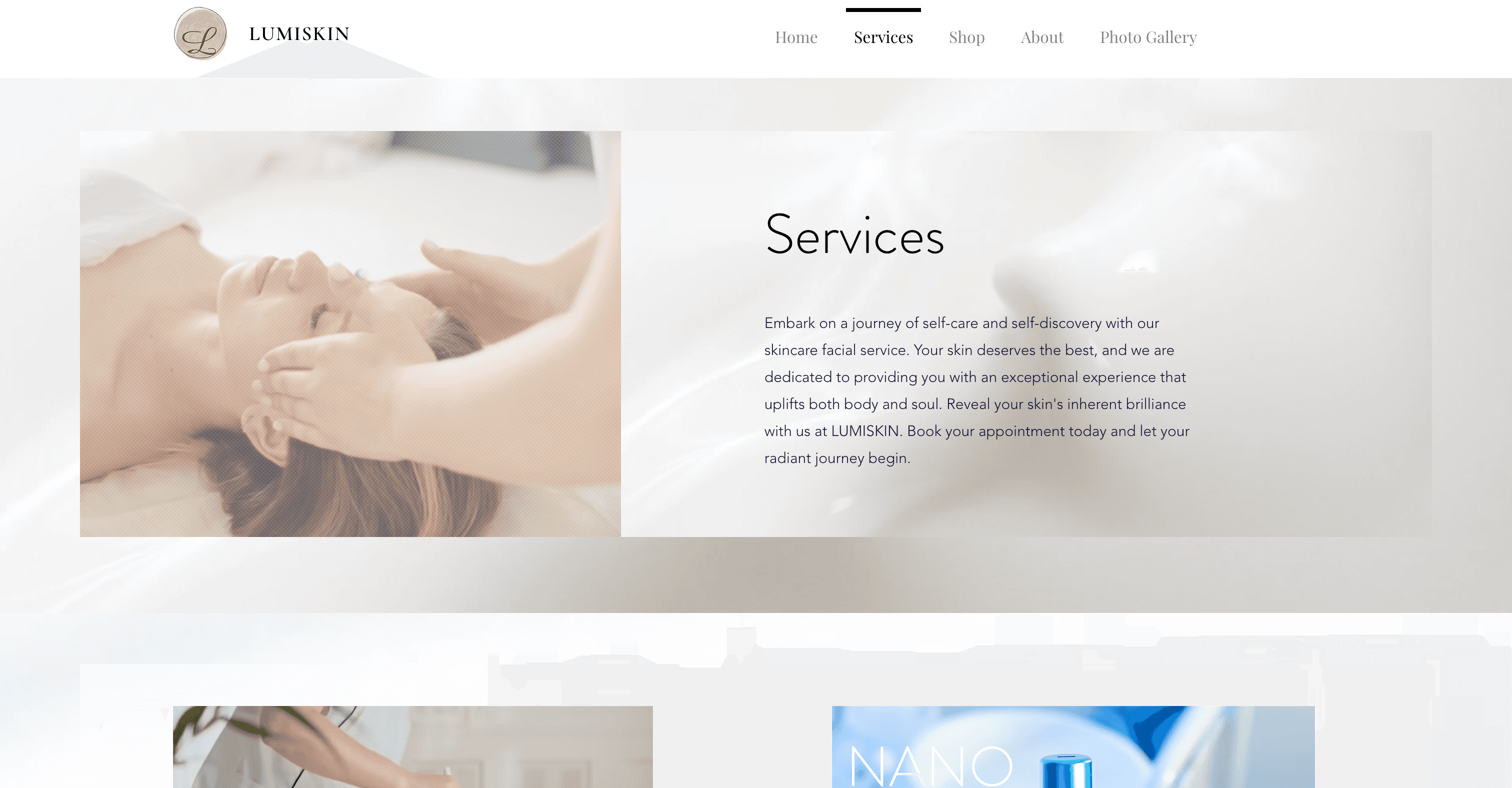
Beauty Spa Startup — Marketing Website
Designed and launched a booking website that helps users discover spa services, book appointments, and complete payments online.

Education Platform — University Application Support Website
Redesigned a university application support website for an international education consultancy, restructuring the information architecture and visual design to help prospective students quickly understand services and take action — resulting in 2x more inquiries and 80% of users reporting improved findability.
